Every telescope has a limit: the faintest star it can barely make out. Every microscope has one too—the smallest speck it can barely resolve. Lower these limits, and fainter stars come into view, and finer details come into focus. Every X-ray optic—the finely polished mirrors and gratings that focus and disperse X-ray light for experiments—also has limitations. These limits affect the accuracy of experiments at synchrotron beamlines. They arise from inaccuracies in the metrology instruments used to create the crucial ingredient of X-ray optics.
In this study at the Advanced Light Source (ALS), scientists found a way to improve the performance of diffraction grating metrology by developing a calibration approach that changes how the instrument views the sample. The technique makes it possible to identify and correct the defects in the metrology instruments.
Gratings are among the most important components of a synchrotron beamline. Etched with thousands of parallel lines, they split and direct X-ray light finely enough to isolate a narrow spectrum in wavelength or energy—the difference between an imprecise measurement and a precise one. But grating performance is limited by the accuracy of positioning of the etched grooves.
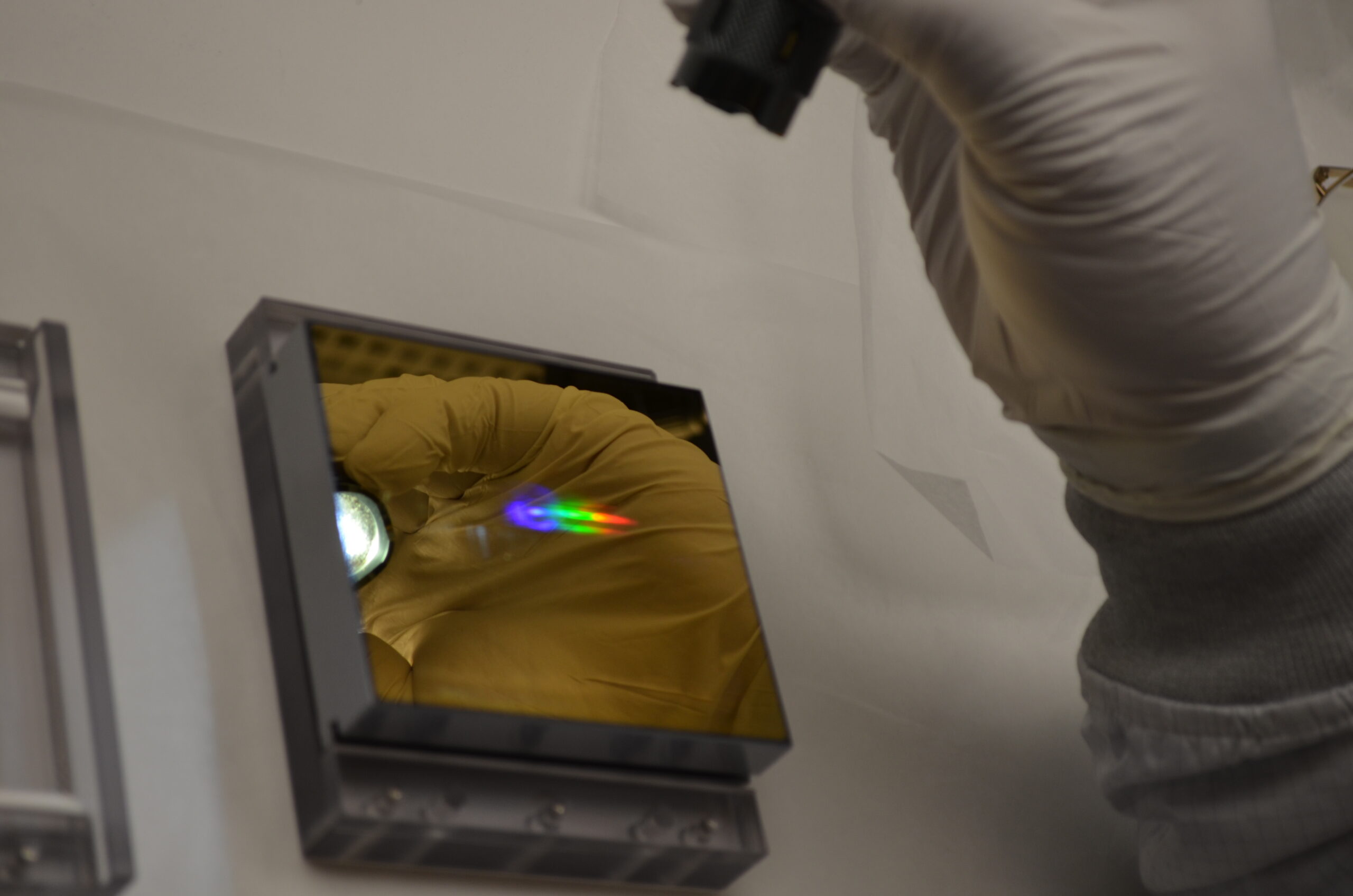
Valeriy Yashchuk, recently retired senior scientist and current affiliate at the ALS, alongside collaborators, found that the gratings used at the ALS were running up against a resolution limit imposed not by the gratings themselves, but by the tools used to measure them. A grating cannot be fabricated more precisely than it can be measured—and existing metrology suffered from inaccuracies that left defects in the optics.
“If our measurements are off by even a fraction of a nanometer, the scientific data down the beamline suffers,” said Yashchuk.
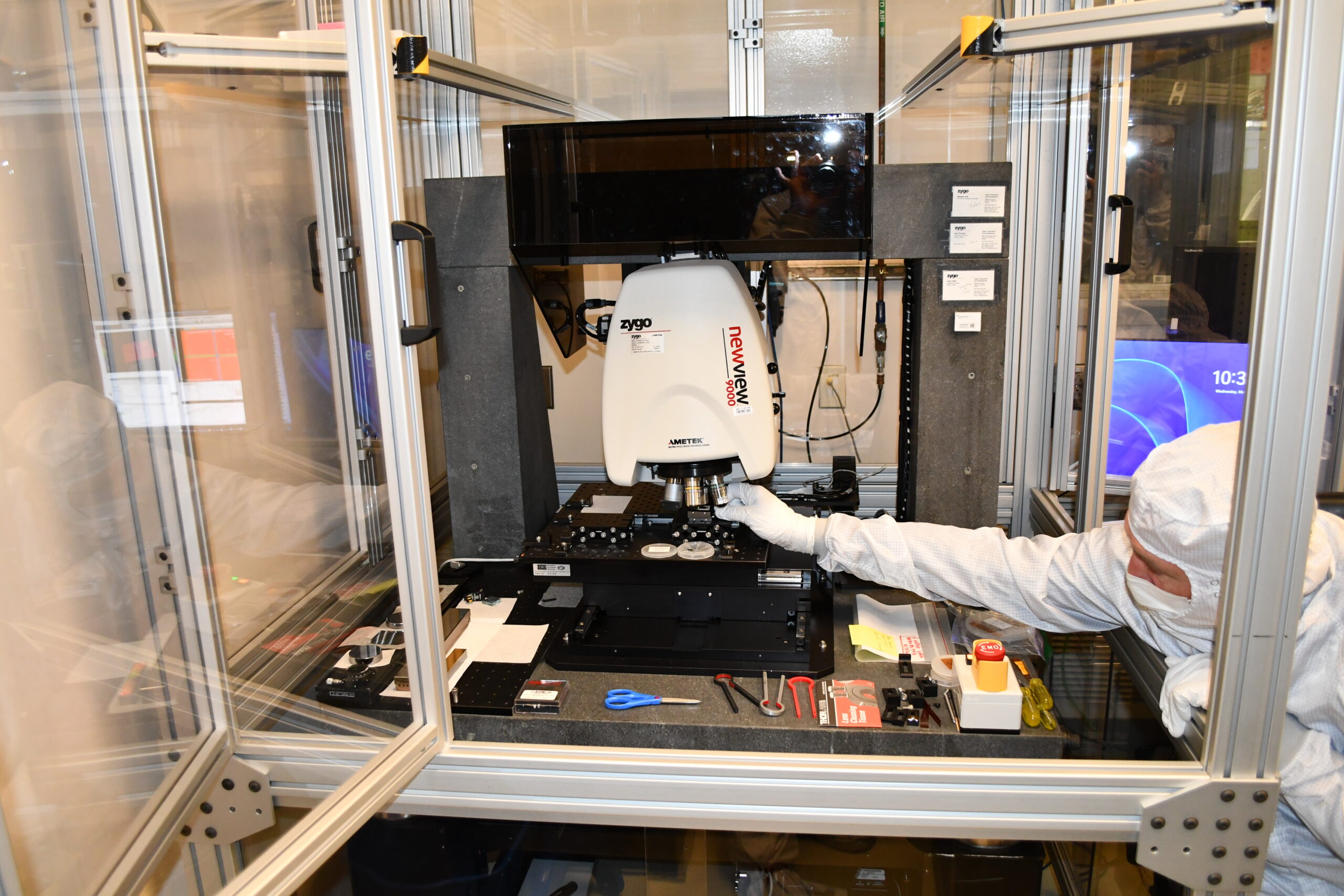
The team’s response was to develop a calibration process, which uses sample artifacts with a precisely known pattern to compare to the instrument reports and see how the instrument is distorting things. Then, the software corrects the distortion in every optical system. By first measuring and correcting the instrument’s own blur and distortion using reference samples of known shape, the team can stitch together many sharp, small-area scans into a trustworthy map of a large grating, including exactly where each groove sits.
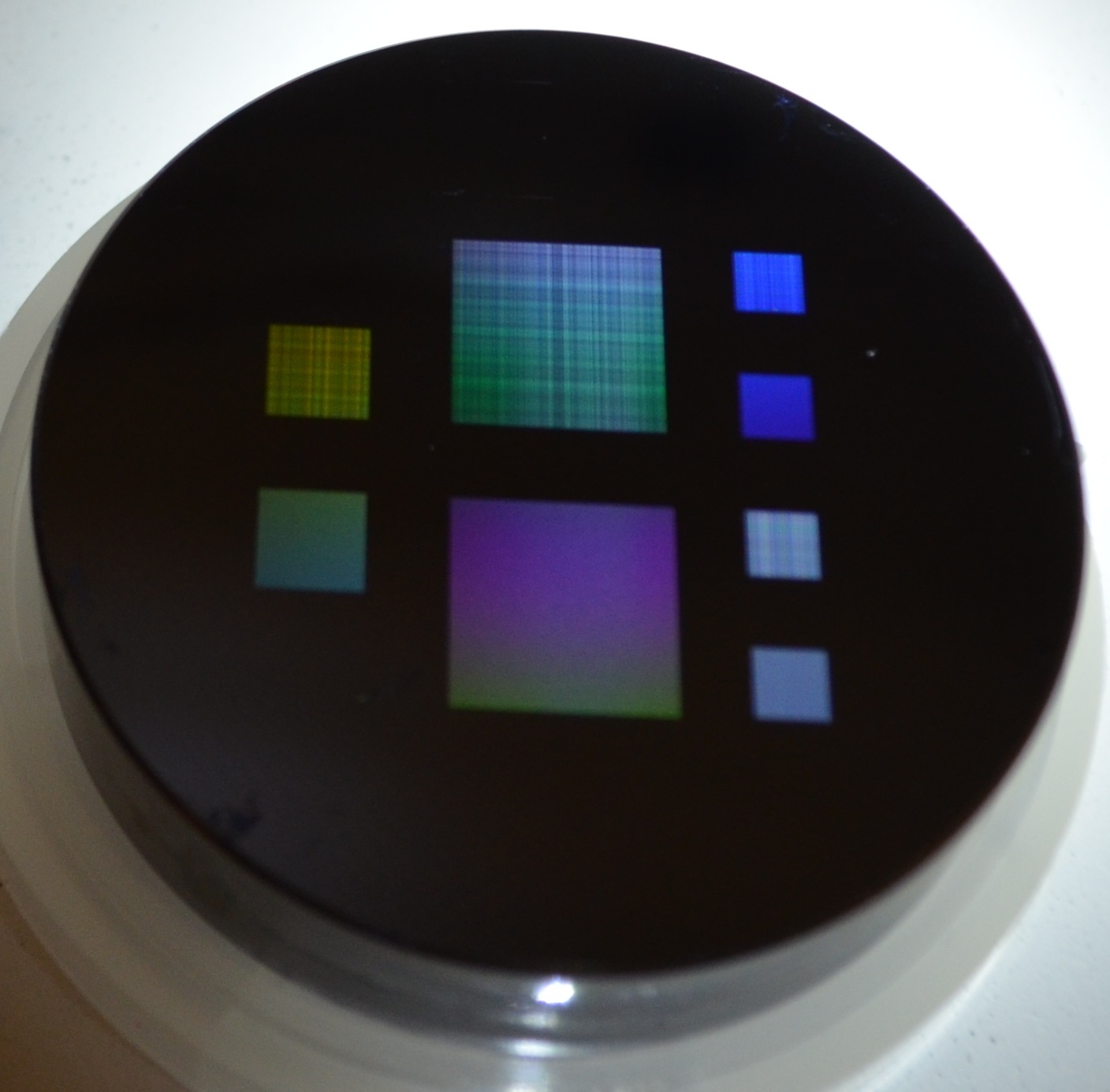
Grating fabrication and metrology sit at the center of the push toward planned upgrades for ALS beamlines, which will demand levels of optical accuracy beyond today’s state-of-the-art technology.
Reaching that level of accuracy means the tools measuring the gratings have to be better than the gratings themselves. The team tackled this problem through a Department of Energy (DOE) Small Business Innovation Research (SBIR) project partnering with Rochester Scientific, LLC, HighRI Optics, Inc., and Surface Metrology Solutions, LLC. Prototype calibration artifacts were fabricated at the Molecular Foundry and measured at the ALS X-Ray Optics Laboratory (XROL), leading to commercial products available now from HighRI Optics, Inc.
The patented calibration method—designed by Valeriy Yashchuk and Wayne McKinney in collaboration with Peter Takacs, physicist emeritus at Brookhaven National Laboratory is turning out to be the most widely useful result.
Because it addresses a measurement problem common to the fabrication of any precision optical component—not just synchrotron gratings—it’s already finding applications beyond the ALS, at other light sources such as National Synchrotron Light Source II, Advanced Photon Source, and Diamond Light Source. Building beamlines capable of the ultimate performance means building better metrology tools first, and those tools serve purposes well beyond the beamlines they were designed for.
Next-generation gratings, with higher accuracy and efficiency, are already under development at the ALS, built and measured with this improved approach, and will maximize the performance of upgraded and new beamlines. These gratings will make possible future advances in microelectronics, quantum science, and energy sciences.
V.V. Yashchuk, P.Z. Takacs, I. Lacey, K. Munechika, K. Yamada, and S. Rochester, “Improvements in optical metrology for high-performance variable-line-spacing X-ray gratings,” Rev. Sci. Instrum. 97, 041301 (2026), doi:10.1063/5.0301612.