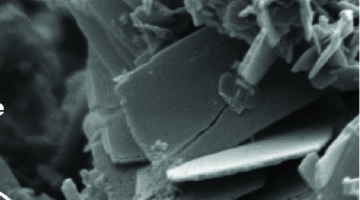
New insights into the ancient Romans’ ingenious concrete harbor structures emerging from ALS beamline research could move the modern concrete industry toward its goal of a reduced carbon footprint.

New insights into the ancient Romans’ ingenious concrete harbor structures emerging from ALS beamline research could move the modern concrete industry toward its goal of a reduced carbon footprint.
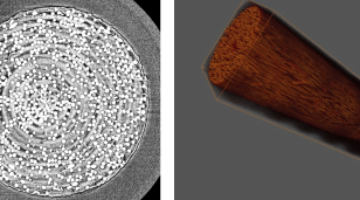
Using ALS tomography capabilities, the EPA is currently investigating how biochar, a promising biofuel byproduct, sorbs environmental toxins and which kinds of biochar are the most effective. The possibilities for widespread use have already launched entrepreneurial commercial ventures.
Read more »
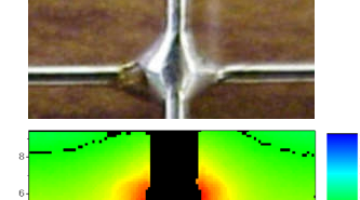
TE Connectivity designs and manufactures more than 500,000 different electronic connectivity products for the automotive, energy, industrial, broadband communications, consumer device, healthcare, aerospace, and defense industries. TE has been investigating how ALS tomography capabilities can help the company develop more efficient connectors.
Read more » 
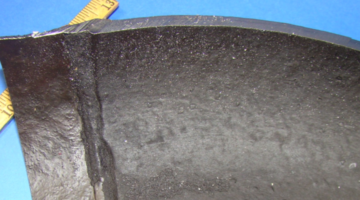
In the chemical environments common in energy production plants, steel pipes and equipment can accumulate layers of iron sulfide, some of which are corrosion resistant and provide protection to the steel surface. Understanding how operating conditions affect steel surface layers can improve corrosion rate estimates, decreasing building and maintenance costs, and increasing the safety and reliability of operating plants. Chevron Energy Technology Company (Chevron ETC) is currently studying the link between operating conditions and corrosion properties at ALS to determine which corrosion layers form and in what order.
The effort to shift U.S. energy reliance from fossil fuels to renewable sources has spurred companies to reduce the cost and increase the reliability of their solar photovoltaics (SPVs). But thinner silicon is more susceptible to stress and cracking, leading one researcher from SunPower Corporation to mount a fundamental approach to systematically find stress and enable solutions for next-generation crystalline silicon SPV systems. Read more »
In January 2013, the U.S. Food and Drug Administration approved NESINA for the treatment of type 2 diabetes in adults as an adjunct to diet and exercise. NESINA was invented by scientists at Takeda California, who used ALS Beamlines 5.0.2 and 5.0.3 to collect x-ray diffraction data.
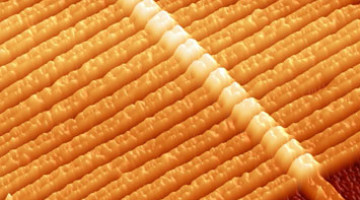
HP Labs researchers have tackled a decades-old mystery relying on powerful ALS microscopy techniques—to better understand the fourth basic circuit element: the memristor. The memristor (short for “memory resistor”) joins the other passive elements—the capacitor, the resistor, and the inductor—to create a device with the ability to “remember” changes even when it loses power. Commercial development based on memristors offers the promise of computing systems with highly advanced energy efficiency and memory retention. Memristor-based memory could be a strong competitor for current flash memory.
Crystallographic Consulting has a varied client base that includes many of the participating research team (PRT) members at the Berkeley Center for Structural Biology (BCSB), which operates five ALS beamlines. Crystallographic Consulting also contracts beam time for another 10-12 companies. Most of their research supports pharmaceutical companies working on new treatments for metabolic diseases and cancer.
Alternatives to the current lithium-ion-based car batteries are at the forefront of the automotive industry’s research agenda—manufacturers want to build cars with longer battery life, and to do that they’re going to have to find new solutions. One promising battery material is magnesium (Mg)—it is more dense than lithium, it is safer, and the magnesium ion carries a two-electron charge, giving it potential as a more efficient energy source. Magnesium has a high volumetric capacity, which could mean more battery power in a smaller space. However, to bring Mg batteries to the commercial market, researchers must create new electrolytes with improved properties. The x-ray absorption spectroscopy (XAS) facilities at the ALS are vital to understanding the interfaces and active species in Mg batteries.
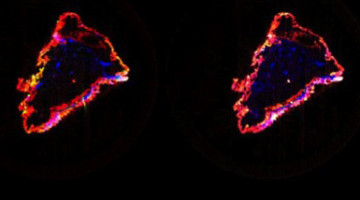
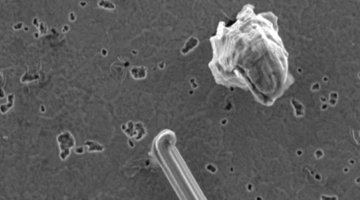
Understanding “whisker” growth—the spontaneous growth of long filament-like grains on the leads, or “legs,” of electronic components—is key to manufacturing reliable lead-free electrical and electronic equipment. Cisco Systems, one of the world’s largest networking equipment producers, has provided funding and technical support to a group of ALS users from Purdue University to research the mechanism and driving forces for whiskers, with the ultimate goal of defining effective mitigation measures.