DOE recently awarded a combined $8.55 million to two Berkeley Lab-led teams to build new tools that harness the power of artificial intelligence and machine learning. Synchrotron and nanoscience users will benefit from Alex Hexemer’s MLExchange and Andrew Minor’s 4D Camera Distillery, both multidisciplinary projects involving multiple national labs. Read more »
Machine Learning Helps Stabilize Synchrotron Light
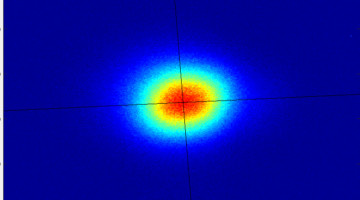
Researchers showed that machine learning can predict noisy fluctuations in the size of beams generated by synchrotron light sources and correct them before they occur. The work solves a decades-old problem and will allow researchers to fully exploit the smaller beams made possible by recent advances in light source technology. Read more »

Machine Learning Enhances Light-Beam Performance at the Advanced Light Source
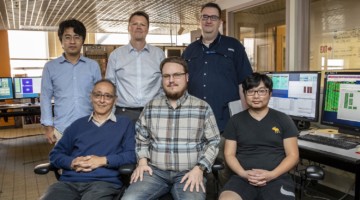
Researchers have successfully demonstrated how machine-learning tools can improve beam-size stability via adjustments that largely cancel out these fluctuations—reducing them from a level of a few percent down to 0.4 percent, with submicron precision. The demonstration shows that the technique could be viable for scientific light sources around the globe. Read more »
Scientists Use Machine Learning to Span Scales in Shale
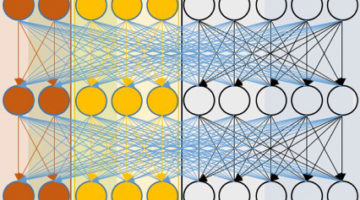
Machine-learning techniques have been used to integrate fine- and large-scale infrared characterizations of shale—sedimentary rocks composed of minerals and organic matter. Understanding shale chemistry at both the nano and mesoscale is relevant to energy production, climate-change mitigation, and sustainable water and land use. Read more »