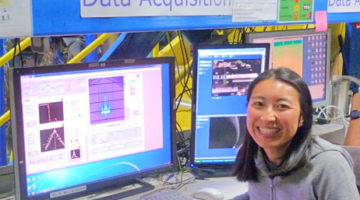
In an ongoing effort to build closer working relationships between Berkeley Lab’s light source and nanoscale science research center, Elaine Chan has recently been appointed by the ALS and the Molecular Foundry to a new role as joint ALS/Foundry project scientist. Chan’s mission will be to foster collaborations between the two facility’s users and to communicate a wider understanding about how the two research centers are mutually scientifically beneficial. Read more »
In Situ X-Ray Scattering Helps Optimize Printed Solar Cells
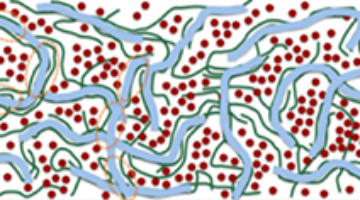
Printable plastic solar cells are a potential source of inexpensive renewable energy, but the transition from lab to factory results in decreased efficiency. Now, for the first time, a miniature solar-cell printer installed in a beamline allows researchers to use x-ray diffraction and scattering to figure out why. Read more »

Student UEC Member Goes Above and Beyond
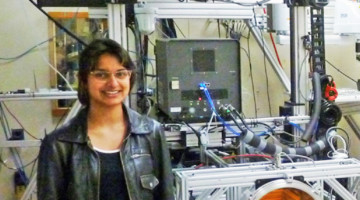
As a student representative to the ALS Users Executive Committee (UEC) for the past two years, Mahati Chintapalli has gained a better understanding of how the ALS functions as an organization, while the UEC has gained a devoted and outgoing member. She’s currently a PhD student in Materials Science and has been conducting research at the ALS since 2011. Read more »
The influence of molecular orientation on organic bulk heterojunction solar cells
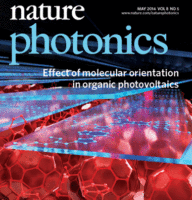
Work done on ALS Beamlines 11.0.1.2, 7.3.3, and 5.3.2.2. reveals that preferential orientation of polymer chains with respect to the fullerene domain leads to a high photovoltaic performance. Read more »
The Molecular Ingenuity of a Unique Fish Scale
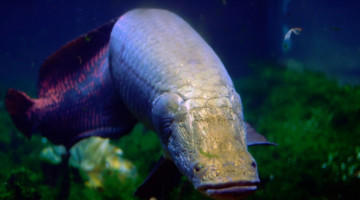
ALS research has shown how the scales of a freshwater fish found in the Amazon Basin can literally re-orient themselves in real time to resist force, in essence creating an adaptable body armor. Read more »
Self-Assembly of “S-Bilayers”, a Step Toward Expanding the Dimensionality of S-Layer Assemblies
Protein-based assemblies with ordered nanometer-scale features in three dimensions are of interest as functional nanomaterials but are difficult to generate. Here we report that a truncated S-layer protein assembles into stable bilayers, which we characterized using cryogenic-electron microscopy, tomography, and X-ray spectroscopy. Read more »
- « Previous Page
- 1
- …
- 5
- 6
- 7