
Researchers from Cairo University worked with teams at the ALS to study soil and bone samples dating back 4,000 years. The experiments are casting a new light on Egyptian soil and ancient mummified bone samples that could provide a richer understanding of daily life and environmental conditions thousands of years ago. Read more »
Go With the Flow: Scientists Design Better Batteries for a Renewable Energy Grid

Researchers developed a versatile yet affordable battery membrane—from a class of polymers known as AquaPIMs. This class of polymers makes long-lasting and low-cost grid batteries possible based solely on readily available materials such as zinc, iron, and water. Read more »
Multimodal Study of Ion-Conducting Membranes
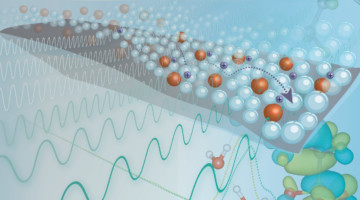
Using multiple x-ray characterization tools, researchers showed how chemical and structural changes improve the performance of a novel ion-conducting polymer (ionomer) membrane from 3M Company. The work provides insight into factors impacting the proton conductivity of ionomers used for fuel cells and the production of hydrogen fuel. Read more »

Self-Assembling Nanomaterials Are Organized and Tunable
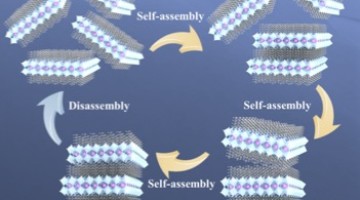
Perovskite superlattices have a wide variety of applications, but they are difficult to synthesize. Researchers have now characterized their self-assembly process to better understand how to create a variety of superlattice materials. Read more »
Chemical and Morphological Origins of Improved Ion Conductivity in Perfluoro Ionene Chain Extended Ionomers

Resonant x-ray scattering and x-ray absorption spectroscopy with elemental sensitivity unravel structural features tied to water–ion domains and discern sulfur-containing groups in sulfonated ionomers, which help delineate chemical factors controlling their phase-separated morphology and governing ion transport. Read more »
Linking Structure to Behavior in Twisted Liquid Crystals
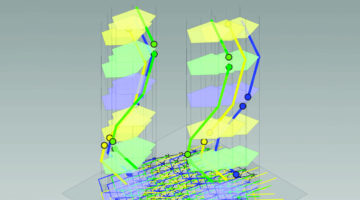
Researchers untangled connections between structure and behavior in a class of liquid crystals consisting of flexible, chain-like molecules that self-organize into twisting patterns. The study opens up new possibilities for designing novel liquid-crystal molecules that allow greater control of nanoscale behavior for technological applications. Read more »
Heliconical-layered nanocylinders (HLNCs) – hierarchical self-assembly in a unique B4 phase liquid crystal morphology

Morphology is of critical importance for molecular crystals, drug molecules, alloys, and elements in the periodic table. We here demonstrate how very subtle structural changes in a set of bent-core liquid crystals lead to rather complex hierarchical superstructures driven by changes in molecular conformation. Read more »
Mechanical Competence and Bone Quality Develop During Skeletal Growth

Researchers explored how bone quality and mechanical competence progress during longitudinal bone growth. Deformation at the tissue, fibril, and mineral length scales was investigated with mechanical tensile tests during small and wide-angle x-ray scattering/diffraction (SAXS/WAXD) experiments, revealing dramatic differences in mechanical resistance with age. Read more »
Conductive triethylene glycol monomethyl ether substituted polythiophenes with high stability in the doped state

Researchers synthesized and characterized two iodine-doped polymers with high conductivity and stability. The doping increases the transparency of thin films of the polymer, which are resistant to common organic solvents. All these properties indicate great potential for the polymers to be used in applications such as organic field effect transistors, organic photovoltaic devices, and sensors. Read more »
Self‐Assembly of Large‐Area 2D Polycrystalline Transition Metal Carbides for Hydrogen Electrocatalysis
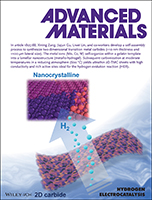
Xining Zang et al. develop a self‐assembly process to synthesize 2D transition metal carbides (TMCs). The metal ions (Mo, Co, W) self‐organize within a gelatin template into a lamellar nanostructure. Subsequent carbonization at moderate temperatures in a reducing atmosphere yields ultrathin 2D‐TMC sheets with high conductivity and rich active sites ideal for the hydrogen evolution reaction. Read more »
- « Previous Page
- 1
- …
- 3
- 4
- 5
- 6
- 7
- Next Page »