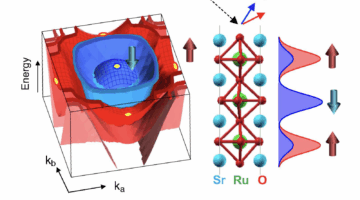
The strontium ruthenate family has a perovskite-like structure that can assemble into different configurations, offering an ideal way to study how the physics change as the material goes from 3D to 2D. In this study, researchers revealed how electrons with different spins behave in distinct layers of a three-layer magnetic material. The results deepen the field’s understanding of how magnetism emerges in layered materials, an important concept for future magnetic technologies and quantum electronic devices. Read more »
Stable 2D Interlayer Prolongs Perovskite Devices
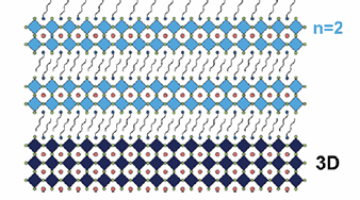
Layered 2D/3D perovskite bilayer heterostructures have the potential to boost the performance and durability of many types of electronic and photonic devices, but maintaining this performance depends on the stability of the cell’s 2D interlayer. In this study, researchers optimized time-resolved, spontaneous thin-film deposition of 2D perovskites using a mixed solvent approach to produce phase pure, stable thin films with high crystallinity. Read more »
Dehydration Key Element in Soil Microbe Evolution
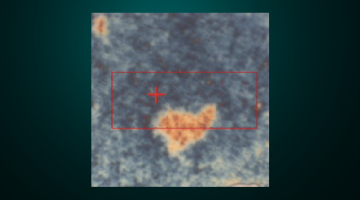
A new study illustrates how microbes respond, in real time, to environmental stress, improving the research community’s knowledge of the hidden microbial engines that keep our planet running. Read more »
Researchers Identify Viral Swiss Army Knife, Clarifying How Replication Occurs
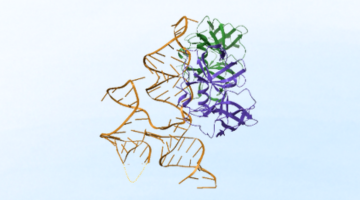
Viruses are ingenious, infectious agents, capable of replicating inside the living cells of a host organism. Enterovirus, a common viral pathogen, is responsible for a range of diseases from mild colds to severe conditions, including viral meningitis, myocarditis, and paralysis. A new study sheds light on how enteroviruses use structured RNA elements and multifunctional proteins to coordinate viral replication efficiently using minimal genetic material. Read more »
Operando probing dynamic migration of copper carbonyl during electrocatalytic CO2 reduction

In their work, Peidong Yang and colleagues reveal the dynamic evolution from faceted Cu nanocatalysts into metallic nanograins during CO2 reduction driven by the surface migration of electrogenerated copper carbonyl. Read more »
Multimetallic Systems Convey Cost-Effective Hydrogen Storage

A bimetallic material (Pd-Ni) produces hydrogen-active nanopockets that improve the efficiency and lower the cost of hydrogen storage systems. Mechanistic understanding of a Pd-Ni bimetallic system paves the way to design cost-effective hydrogen storage, opening new opportunities to develop reliable energy technologies necessary to advance the energy industry. Read more »
ALS Captures Structure of Engineered Protein, Opening New Options to Treat IBD

Researchers use the ALS to confirm the structure of an engineered immune protein that could open new opportunities to treat inflammatory bowel disease. Read more »
Polyethylene Upcycling to Liquid Alkanes in Molten Salts under Neat and External Hydrogen Source-Free Conditions
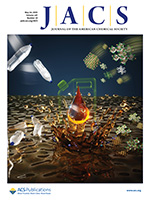
Researchers found a way to turn single-use plastics (e.g., grocery bags and packaging) into useful liquid fuels, like components of gasoline or diesel, without needing high heat, rare metals, or added chemicals. The work presents a promising pathway to address the global plastic waste crisis, with both environmental and economic advantages. Read more »
Vertical gradient in atmospheric particle phase state: a case study over the alaskan arctic oil fields

Integrating chemical composition and phase state measurements demonstrated that carbonaceous-rich and organic-dominated particles exhibited higher viscosities, while inorganic-rich particles displayed lower viscosities. This finding establishes an association between composition and phase state, offering critical insights into the vertical stratification of Arctic particles. Read more »
Identification of Structurally Novel KRASG12C Inhibitors through Covalent DNA-Encoded Library Screening

DNA-encoded library (DEL) technology was used to prepare a ~1.6 × 10⁷-compound cysteine-reactive library (representative component shown at bottom, cysteine-reactive site indicated). Screening this library against the KRASG12C oncoprotein identified multiple structurally novel inhibitors of this challenging-to-drug target (e.g., frontmost green compound in the X-ray structure at right, covalent bond to KRASG12C indicated). Read more »