Researchers confirmed that a radially graded, low-nickel cathode sustains reversible oxygen redox across repeated cycling, enabling high capacity with minimal degradation. This cathode could cut nickel usage in electric vehicle batteries, lowering supply risk and financial and environmental costs, while preserving energy density and lifespan. Read more »
All News & Updates
Hidden State Precedes Superconductivity in Kagome Metal
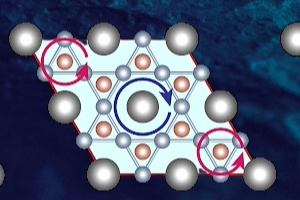
Experiments at the ALS revealed a hidden electronic phase that breaks time-reversal symmetry before a charge-density wave forms in a kagome metal. Because hidden electronic order can compete with or shape superconductivity, this finding helps guide the search for high-temperature, unconventional superconducting materials. Read more »
Scientists Uncover How Calcite Repairs Cracks in Its Structure
Researchers uncovered how calcite repairs cracks in its structure over time. These findings could improve reservoir management for extracting resources such as geothermal energy from the Earth. Read more »
ALS-United: Elmie Peoples-Evans and Fernando Sannibale
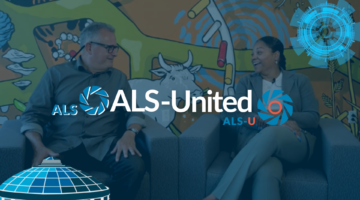
ALS-United is an opportunity to meet the people collaborating at the Advanced Light Source and the ALS Upgrade project. Hear firsthand how team science enables the cutting-edge research of today and builds the facility of the future. This month, we spoke with Elmie People-Evans, project manager for the ALS Upgrade, and Fernando Sannibale division deputyRead More Read more »
Microscopy Reveals How Early Human Diets Led to Tougher Teeth
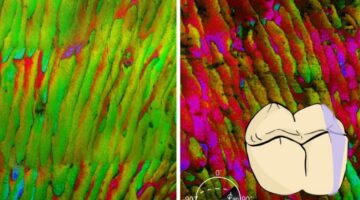
Microscopy at the ALS revealed that nanocrystal misorientation in tooth enamel tracked major dietary shifts in primates, contributing to enamel’s resilience. These structural details provide a blueprint for developing tougher, crack-resistant bioinspired materials, next-generation structural ceramics, and coatings. Read more »
Deadline for General User Proposals is September 2

The User Office is accepting new General User Proposals (GUPs) and beamtime requests (BTRs) on existing GUPs. The deadline for submissions is September 2, 2026. Please read the upcoming schedule information closely and contact alsproposals.lbl.gov with any questions.
Read more »
In Memoriam: Jim Underwood, Retired Berkeley Lab Physicist
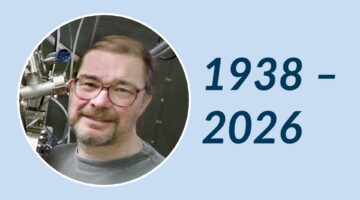
We are saddened to report the passing of Jim Underwood, who made many significant contributions to the early days of the Advanced Light Source and the Center for X-ray Optics. Read more »
Burning Questions: How Heat Shield Materials Evolve Under Extreme Heat
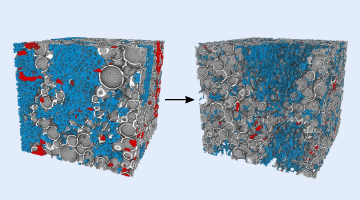
Superlight ablator materials are critical for protecting spacecraft under the extreme heat of atmospheric reentry. Researchers combined in situ X-ray microcomputed tomography at the ALS with super-resolution techniques to characterize the microstructural evolution of these materials during heating. Read more »
ALS Fellowship Application Window Opens in September
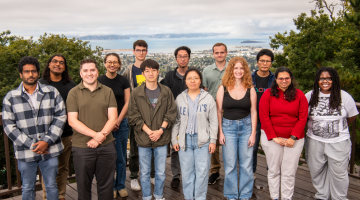
Applications for fellowships to start in winter or spring 2027 will be accepted from September 8–October 2. Fellows will spend up to a year in residence at the ALS pursuing research projects in teams that include staff and the user community, and will be exposed to current scientific challenges that advanced synchrotron radiation tools can tackle. Read more »
Powering Science: How SYNAPS-I Builds on Meta’s Open Source AI
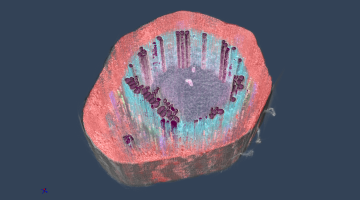
SYNAPS-I, a DOE initiative led by Berkeley Lab, unites 60 researchers across five labs to speed up X-ray and neutron data analysis using AI. Because prepublication data must stay on secure government systems, open-source models from Meta — SAM 3 and DINOv3 — let the team fine-tune cutting-edge AI entirely in-house. Read more »
- 1
- 2
- 3
- …
- 145
- Next Page »