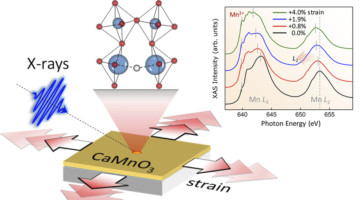
Researchers have demonstrated a novel way to systematically strain-engineer oxygen vacancies in complex transition-metal oxide thin films. The work advances our ability to tailor such defects, small changes in which can lead to dramatic changes in material properties such as conductivity and magnetism. Read more »
All News & Updates
Gregory Su, Physicist Postdoctoral Fellow

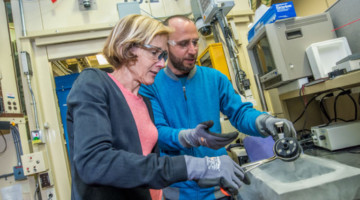
Gregory Su is a postdoctoral fellow studying connections between chemistry, structure, and function in soft materials by combining experimental soft x-ray spectroscopy and scattering with ab initio calculations. Su has been at the ALS since March 2016 and works primarily with the scattering group at Beamline 11.0.1.2, the Resonant Soft X-Ray Scattering (RSoXS) Beamline. Read more »
Study Sheds Light on How Bacterial Organelles Assemble
Scientists are providing the clearest view yet of an intact bacterial microcompartment (BMC), revealing the polyhedral structure and assembly of this organelle’s protein shell. Having the full structure can help provide important information in fighting pathogens or bioengineering bacterial organelles for beneficial purposes. Read more »
Protein Complex Shows Promise for Berkelium Separation
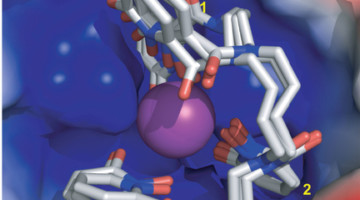
Scientists found that the element berkelium breaks form with its heavy-element peers by taking on an extra positive charge when bound to a synthetic organic molecule. This property could help scientists develop better methods for handling and purifying nuclear materials. Read more »
New Evidence for a Water-Rich History on Mars

Mars may have been a wetter place than previously thought, according to experiments on lab-synthesized mineral samples serving as proxies for Martian meteorites. Shock experiments followed by x-ray diffraction studies showed how changes in the minerals could indicate a more water-rich history for the Red Planet. Read more »

A Seaweed Derivative Could Be Just What Lithium-Sulfur Batteries Need
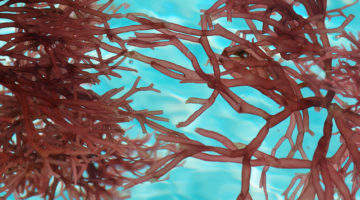
Lithium-sulfur batteries have great potential as a low-cost, high-energy, energy source for both vehicle and grid applications. However, they suffer from significant capacity fading. Now, scientists have found that carrageenan, a seaweed derivative, acts as a stabilizer, allowing for more cycling and an extended lifetime. Read more »
A Systematic Approach to Customizing Cyclic Proteins
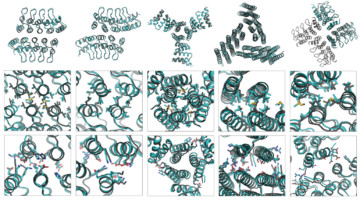
Proteins consisting of identical subunits arranged symmetrically around a central axis (cyclic homo-oligomers) play key roles in many biological processes. Researchers have now developed a systematic approach to their design and demonstrated its accuracy using protein crystallography and small-angle x-ray scattering. Read more »
Researchers Find a Surprise Just Beneath the Surface in Carbon Dioxide Experiment
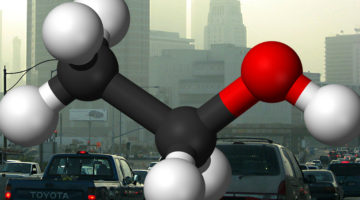
X-ray experiments, coupled with theoretical work, revealed how oxygen atoms embedded near the surface of a copper sample had a more dramatic effect on the early stages of a reaction with CO2 than accounted for in earlier theories. This work could prove useful in designing new catalysts for converting CO2 into liquid fuels and other products. Read more »
New Open Access Requirements

To comply with DOE’s Public Access Plan, Berkeley Lab must ensure that open-access versions of publications co-authored by Lab employees are included in DOE’s open-access system. If you co-author work with a Lab scientist, please note that the scientist may ask you for an open-access version of the manuscript. We request that you cooperate with our scientists in a timely fashion and provide manuscripts to satisfy this DOE requirement when asked. Read more »
2017 ALS User Meeting Award Nominations Due July 14

Nominations for the 2017 ALS User Meeting awards will open soon and are due on July 14. Consider preparing a nomination for a deserving colleague or group of individuals for one of the three awards. In addition to the award plaque, there will be a cash prize associated with each award. Read more »
- « Previous Page
- 1
- …
- 113
- 114
- 115
- 116
- 117
- …
- 146
- Next Page »