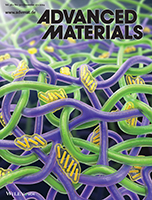
Giant molecule acceptors (GMAs), known for their large size and intricate functional structures, are an emerging focus in materials science. Through implementation of an interface-enhanced layer-by-layer fabrication strategy, we have successfully demonstrated that GMA with designed electronic structure at interfaces can effectively improve OPV device performance. Read more »
ALS Work Using Scattering/Diffraction
These techniques make use of the patterns of light produced when x-rays are deflected by the closely spaced lattice of atoms in solids and are commonly used to determine the structures of crystals and large molecules such as proteins.
Magnetization Switching in Highly Magnetostrictive Microstructures
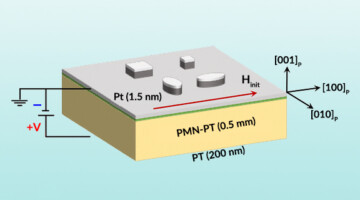
Researchers learned how the size, shape, and orientation of microstructures affect how they switch magnetization directions in response to an applied voltage. The work advances our understanding of strain-responsive composite materials for use in energy-efficient electronic applications such as memory devices, sensors, and actuators. Read more »

Protein Pioneer: Enabling Scientists to Design Novel Proteins for the Future

The 2024 Nobel Prize in Chemistry was awarded to David Baker, Demis Hassabis, and John M. Jumper for the development of protein structure prediction and design. At the ALS, Baker leveraged high-throughput small-angle x-ray scattering (SAXS) and protein crystallography capabilities to design novel proteins and pave a new pathway for science, technology, and the environment. Read more »
Manganese Cathodes Could Boost Lithium-ion Batteries
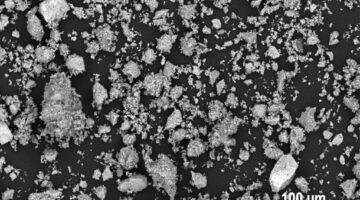
Rechargeable lithium-ion batteries are used in mobile devices, electric vehicles, and energy storage systems. But supplies of nickel and cobalt, commonly used in the cathodes of these batteries, are limited. New research opens up a potential low-cost, safe alternative in manganese, the fifth most abundant metal in the Earth’s crust. Read more »
A Promising Compound for Reversible Male Contraception
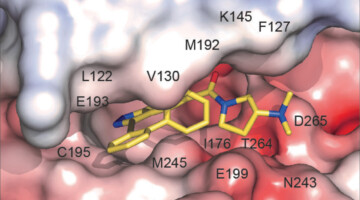
Researchers found that a small-molecule protein inhibitor—screened from billions of compounds and analyzed using structural insights from protein crystallography—reversibly suppresses male fertility in mice. The work addresses the pressing need for more contraceptive options that enable all individuals to control their own fertility. Read more »
Mechanism of an Economical Way to Produce Al–Ce Alloy

A time-resolved diffraction study conducted at the ALS revealed mechanistic insight into a multi-step chemical reaction for the economical production of aluminum–cerium alloy, a high-performance material with superior temperature stability. The results provide crucial information for the application of the method on an industrial scale. Read more »
Strategic ALS Projects Reach Key Milestones
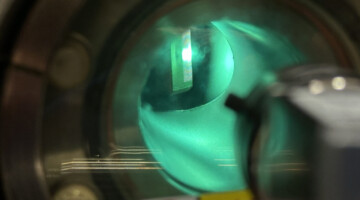
Thanks to the hard work and dedication of multidisciplinary teams from groups across the ALS, a spate of important milestones occurred over the past month, for projects involving the new QERLIN beamline, the MERLIN beamline upgrade, and a new chamber for computer-chip metrology in Sector 12. Read more »
Converting N2 into Usable Form under Ambient Conditions
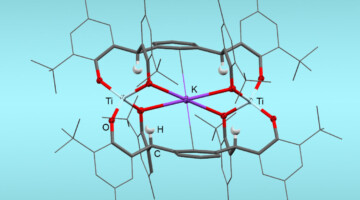
Researchers learned how molecular structure relates to function in catalysts that convert atmospheric nitrogen into more usable forms at room temperature and pressure. The work could lead to greater energy efficiency in producing nitrogen-based products such as fertilizer where large-scale industrial processes are unfeasible. Read more »
Caught in the Actinium
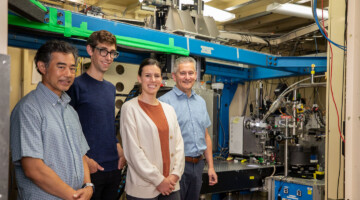
In this work, researchers demonstrated a macromolecular scaffold that combines an 8-coordinate synthetic ligand and a mammalian protein to characterize the solution and solid-state behavior of the longest-lived actinium isotope. The information could help design better cancer treatments. Read more »
Engineered π⋯π interactions favour supramolecular dimers X@[FeL3]2(X = Cl, Br, I): solid state and solution structure

Intermolecular interactions drive the formation of biological supramolecular architectures, inspiring the design of artificial supramolecular assemblies and molecular machines. Here, the engineering of supramolecular interactions allows selection of a self-recognition process of dimerization over one of helicate-cage formation. Read more »
- « Previous Page
- 1
- 2
- 3
- 4
- 5
- 6
- …
- 40
- Next Page »