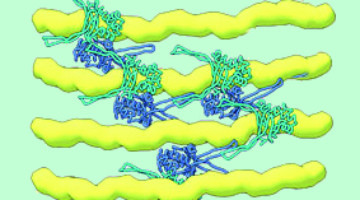
Multiscale, multimodal visualization techniques at the ALS enabled researchers to clarify how proteins remodel bacterial DNA in response to stressful environments. The discovery could lead to new strategies for controlling microbial behavior and, eventually, new ways to fight bacterial infections. Read more »

On-Off Switch for Regulating Tumor-Cell Growth
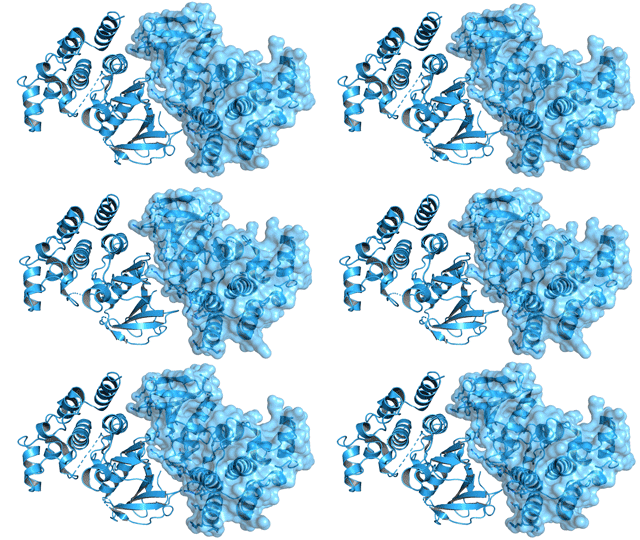
The mechanisms that affect the regulation of cell growth in certain tumor cells were revealed by a Genentech study of enzyme structures, conducted in part at the ALS. The work establishes a framework for the rational discovery of new therapeutics to improve upon currently existing treatments for certain cancers. Read more »
Direct Imaging of Fracture Closure in Reservoir Shales
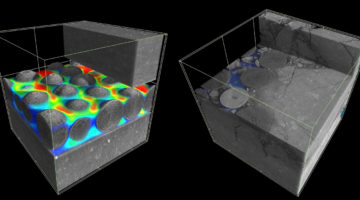
Using x-ray microtomography at the ALS, researchers identified and characterized the microscale factors affecting fluid flow through shale fractures propped open with sand or ceramic spheres. A better understanding of propped fractures can lead to safer and more efficient recovery of hard-to-reach oil and gas resources. Read more »
Assembly Lines for Designer Bioactive Compounds

Researchers successfully bioengineered changes to a molecular “assembly line” for bioactive compounds, based in part on insights gained from small-angle x-ray scattering at the ALS. The ability to re-engineer these assembly lines could improve their performance and facilitate the synthesis of new medically useful compounds. Read more »
ALS Reveals Vulnerability in Cancer-Causing Protein
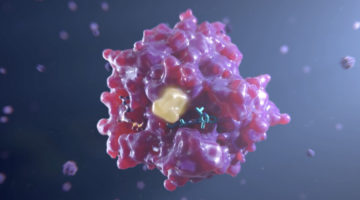
A promising anticancer drug, AMG 510, was developed by Amgen Inc. with the help of novel structural insights gained from protein structures solved at the ALS. AMG 510, which is currently in phase II clinical trials for efficacy, targets tumors caused by mutations in the KRAS protein, one of the most common causes of cancer. Read more » 
Molecular Handle Enables Viral Attack on Joint Cells
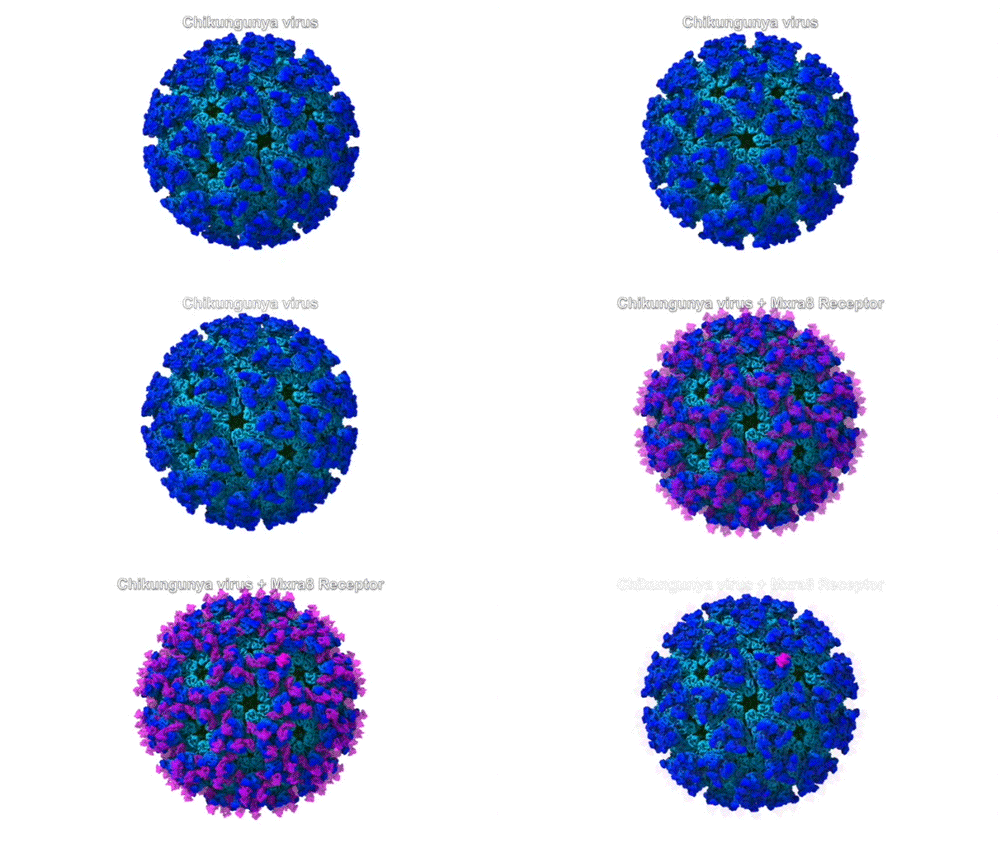
A collaboration of university and industry researchers used x-ray crystallography to investigate how the chikungunya virus, which can cause debilitating joint pain, engages a receptor protein found on the surfaces of joint cells. The work provides a path forward in the fight against a family of viruses that can result in acute and chronic arthritis. Read more »
The Choreography of Quantum Dot Fusion
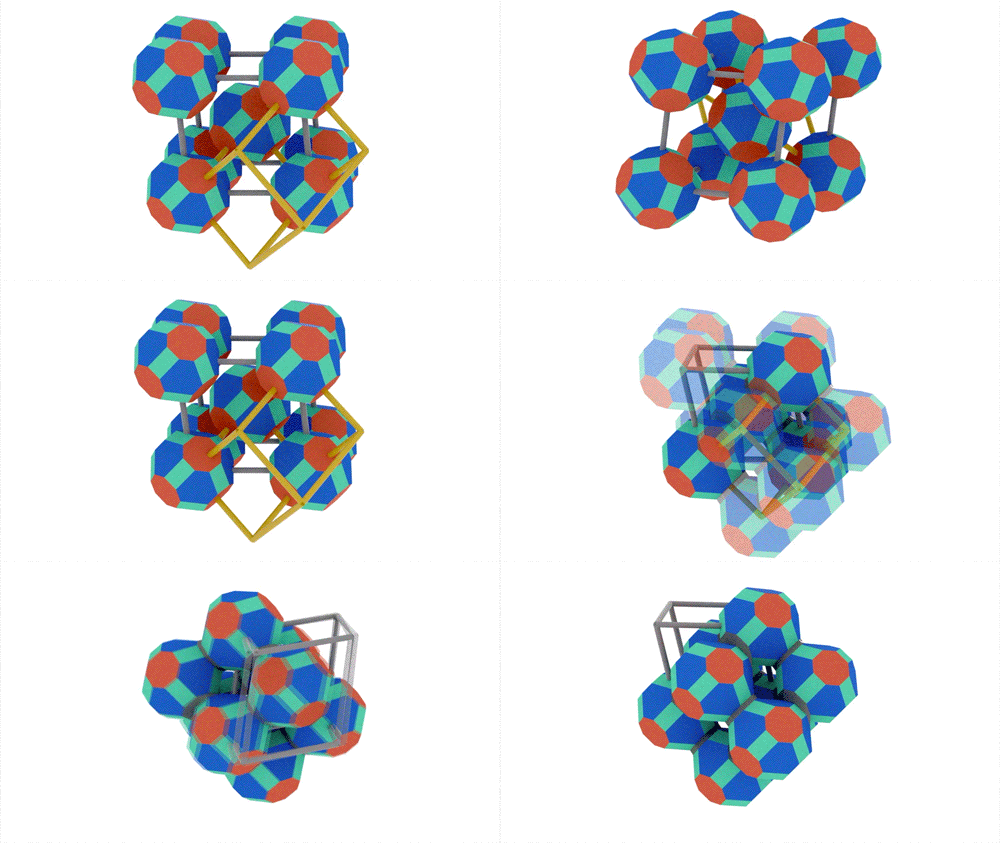
X-ray scattering experiments helped reveal how nanosized crystals (“quantum dots”) self-assemble and fuse to form “supercrystals” with potentially useful electronic properties. The findings provide new insight into the fabrication of high-performance, low-cost electronic materials for photovoltaic and photon-sensing applications. Read more »
Teamwork Restores ALS Function after PG&E Power Shutoff

In October 2019, Berkeley Lab experienced two PG&E power shutoffs. The efforts of numerous staff across the Lab and at the ALS helped restore function—we walk through the recovery process from earlier this month. Read more »
Doctoral Fellows in Residence Wrap Up Year at the ALS
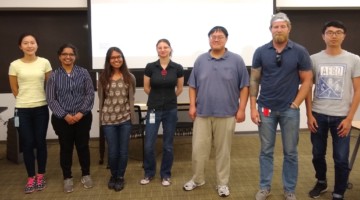
After spending a year at the ALS, our doctoral fellows in residence are preparing to return to their home institutions. Before leaving, they gave lightning talks on the work they did at the beamlines and what else they did in the Bay Area. Read more »
How Light-Harvesting Bacteria Toggle Off and On

Researchers clarified the atomic-level mechanism that enables bacteria to switch light harvesting off and on in response to potentially damaging overexposure to light. The results could have long-range implications for artificial photosynthesis and optogenetics—the use of light to selectively activate biological processes. Read more »